
How AI Is Changing the Way Commercial Kitchens Actually Work
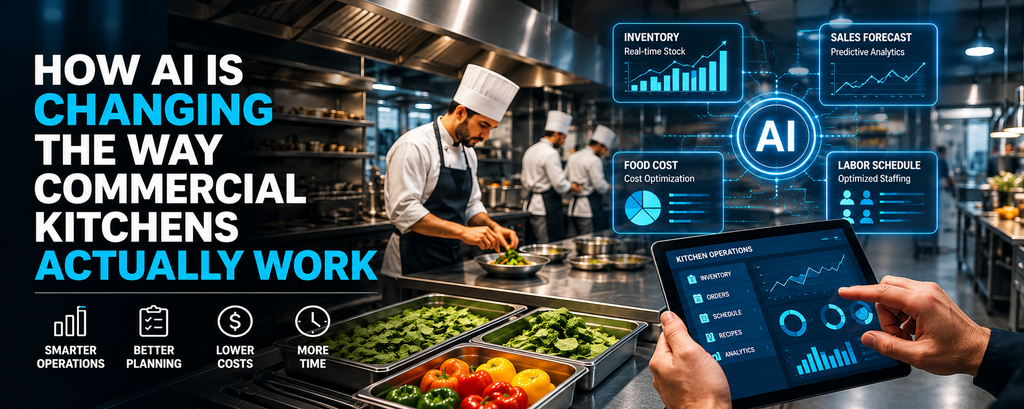
Walk into most commercial kitchens today, and you’ll still find the same controlled chaos that’s defined the industry for decades, tickets piling up, stations shouting across the kitchen, someone frantically checking what’s left in the walk-in. But quietly, underneath all of that, something is shifting. AI has started working its way into kitchens, and unlike a lot of tech trends that promise the world and deliver a headache, this one is making a difference.
The Grunt Work Is Getting Automated
Let’s be honest, a lot of kitchen work is repetitive. Chopping the same vegetables, frying at the same temperatures, portioning the same dishes hundreds of times a day. It’s necessary, but it’s also where human error creeps in and consistency breaks down.
AI-powered machines are now handling a good chunk of that load. Robotic fryers, automated assembly systems, precision grills, they don’t get tired, they don’t have an off day, and they don’t accidentally over-season the sauce at 11 PM on a Saturday. For brands running multiple locations, that kind of consistency isn’t just nice to have. It’s everything. A guest at your downtown location expects the same plate they had at your airport one. AI makes that promise a lot easier to keep.
Kitchens Are Finally Getting Smart About Their Own Data
Here’s something most people outside the industry don’t realize kitchens generate a staggering amount of information every single shift. Cooking times, order patterns, peak hours, ingredient usage, it’s all there. The problem is most of it has historically just… disappeared.
AI changes that. Modern systems can pull data from across kitchen operations in real time, flag inefficiencies as they happen, and give managers actual numbers to work with instead of gut feelings. Why are tickets taking longer on Thursday evenings? Which station is creating a bottleneck during the lunch rush? These aren’t mysteries anymore. They’re data points, and they’re actionable.
Wasting Less Food (Which Also Means Wasting Less Money)
Food waste is one of those problems the industry has always known about and largely accepted as unavoidable. You over-order because you’re scared of running out. You run out anyway, or you throw out what you didn’t use. Margins take the hit either way.
Predictive analytics is quietly dismantling that cycle. By looking at historical sales, seasonal patterns, and customer behaviour, AI can tell you with surprising accuracy what you’re likely to need and when. That means smarter ordering and fresher bulk food supplies going into every dish, and a lot less product going into the bin at the end of the week. For a tight-margin business, that’s not a small thing.
Menus That Actually Reflect What People Want
Menu development used to be a mix of chef instinct, occasional customer feedback, and whatever trends someone spotted on Instagram. That’s not a knock on the process; great dishes have come out of exactly that. But AI adds a layer of precision that’s hard to argue with.
By analysing ordering trends, customer preferences, and real-time feedback, AI platforms can flag which items are underperforming, suggest tweaks, or even propose new combinations worth testing. Some systems are picking up on emerging food trends before they go mainstream. The result is a menu that stays relevant, moves product, and gives customers more of what they want to eat.
Food Safety Gets a Lot Harder to Ignore
Every kitchen operator knows the anxiety of a health inspection. Was the walk-in holding temperature all night? Are the logs up to date? Is everything where it’s supposed to be?
Smart sensors and AI monitoring systems are taking a lot of that anxiety off the table. They track temperatures, storage conditions, and hygiene compliance continuously, and if something’s off, they flag it immediately rather than waiting for someone to notice during a check. Digital logs are maintained automatically, which makes audits less stressful and more transparent. It’s the kind of behind-the-scenes reliability that most customers never see but absolutely benefit from.
Equipment Breaks Down Less When You’re Paying Attention
A fryer dying mid-service isn’t just an inconvenience. It’s lost revenue, a frustrated team, and potentially a dining room full of unhappy guests. The frustrating part is that most equipment failures don’t happen out of nowhere, there are warning signs. They’re just easy to miss when you’re running a busy kitchen.
AI-driven predictive maintenance catches those signs early. By continuously monitoring how equipment is performing, the system can tell you when something needs attention before it becomes a crisis. That means scheduled downtime instead of emergency repairs, longer equipment life, and far fewer moments where everything comes to a halt at the worst possible time.
It’s Not Replacing Chefs. It’s Taking Stuff Off Their Plate.
This is probably the part people are most uncertain about, and it’s worth addressing directly. The fear that AI is coming for kitchen jobs isn’t entirely unfounded, automation does reduce dependency on manual labour for repetitive tasks. But the reality playing out in most kitchens is more nuanced.
What AI is doing is freeing people up. When machines handle the chopping and the frying and the portioning, the humans in the kitchen can focus on the things that require a human, creativity, flavour judgment, hospitality, quality control. As one chef put it, technology helps you build faster and smarter, but whether a dish is right is still a call only a person can make.
The goal isn’t a kitchen without people. It’s a kitchen where the people in it are doing work that matters.
Where This Is All Going
We’re still in the early chapters of this. The kitchens of the near future will likely be fully connected environments, AI, IoT sensors, and automation all talking to each other in real time, adjusting on the fly, learning from every service. That might sound abstract right now, but the foundations are already being laid in kitchens across the industry.
The operators who start adapting now won’t just be ahead of the curve. They’ll have a real head start on a version of this industry that’s going to look different in ten years.
Final Thought
AI in commercial kitchens isn’t a trend you can afford to dismiss or delay indefinitely. It’s a practical, proven tool that’s already helping real kitchens run better with less waste, fewer breakdowns, smarter menus, and more room for the people involved to do their best work.
The technology will keep improving. The kitchens that figure out how to blend it with genuine culinary craft are the ones that will stand out.